 The Qualitative Research Interest Group (QRIG) is an interprofessional group united by an interest in qualitative approaches to health research. Qualitative researchers at MaineHealth Institute for Research and the Center for Health Research, Kaiser Permanente Northwest co-host the group. All are welcome. The group meets via Microsoft Teams on the fourth Thursday of every month. Feel free to forward this to anyone you know who may be interested in attending and/or joining the QRIG.
Please contact Carmit McMullen (Carmit.McMullen@kp.org) to receive the calendar invitation for the QRIG meeting.
The QRIG will meet virtually on Thursday, July 23, from 3:30PM–4:30PM EST.
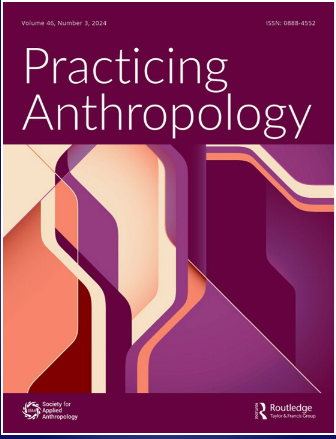
This month, the group will be doing a Journal Club, which means attendees should read the chosen article ahead of time to facilitate productive discussions of it. We will read “Productive Friction,” an article from Practicing Anthropology, in a special issue on “Team Science.” Team science is an approach to research that goes beyond merely having multiple people involved in a project. Carmit McMullen will host and lead the discussion.
QRIG organizers selected this article because they believe it has broad appeal and applicability for qualitative health researchers. While it is written from the perspective of anthropologists, they believe the ideas it presents are relevant for anyone working across disciplines or with community members who often have different frameworks for approaching research. This includes social scientists working with clinicians or nurse researchers, qualitative-focused researchers working with quantitative-minded collaborators, as well as clinician researchers working with community members.
As you read, please consider the following:
- What do the authors mean by “team science”? How does this compare to more traditional approaches to doing science?
- Have you worked in team science settings? How do the experiences discussed in the article compare to your own?
- What do the authors mean by “productive friction”? Whence comes the friction? And why do they say it’s productive?
- What insights from the article do you plan to apply to your own work?
If you have any questions, concerns, comments, criticisms, or ideas for future meetings, please contact michael.kohut@mainehealth.org.
___________________________________________
Looking to enrich your research by gathering information directly from patients, clinicians, community members, and others? Tufts CTSI’s Qualitative and Mixed Methods Service can help.
The Tufts CTSI Qualitative and Mixed Methods Service supports researchers, community members, and others in using qualitative and survey methods in health-related research. We are here to help you go beyond numbers alone by integrating interviews, focus groups, observations, and surveys to generate insights that can improve health and health care.
Researchers, community members, and others affiliated with a Tufts CTSI partner organization can request support by submitting a service request.
- Initial consultations of up to 10 hours are provided at no cost.
- For more extensive consultation, we can join research teams (FTE portion).
To learn more, please submit a service request.



 Do you need help fine-tuning a patient cohort definition? Are you looking to expand your research dataset chart abstraction? Are you working with an OMOP Common Data Model and want to learn about the available tools?
